How to choose
Choosing pans that are still in use in ten years
Material, hob type and cost per year decide which pans survive. The comparison that makes a dear pan the cheap one, and the Irish rights behind it.
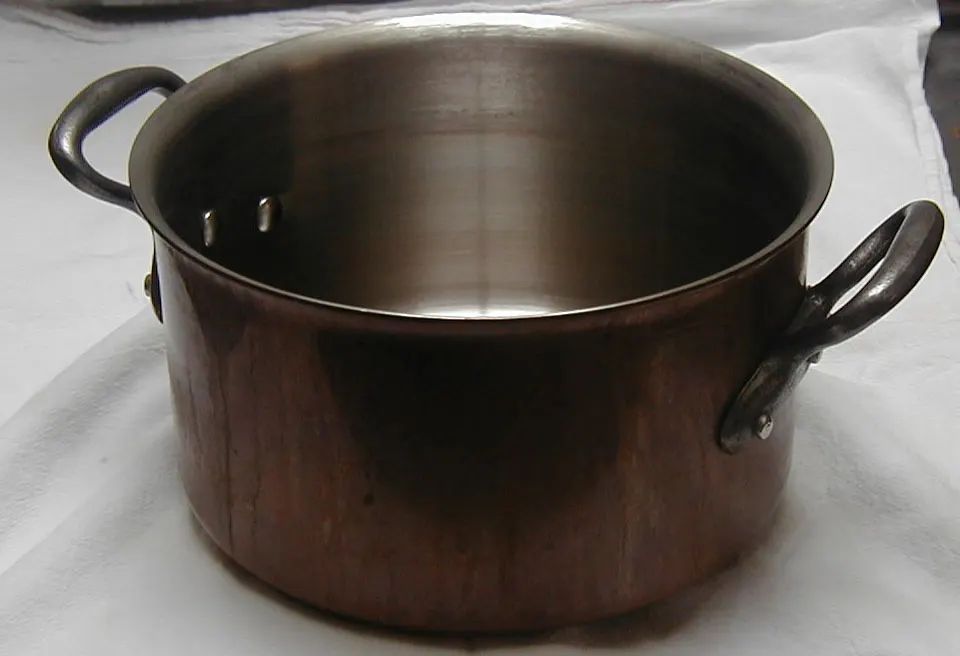
A kitchen fitted out well is fitted out once. The pieces that make that possible are not the most expensive ones; they are the ones whose failure mode is repair rather than replacement, and whose material suits the hob they will sit on for the next two decades.
This guide takes the decision in the order that actually constrains it: hob type first, then material, then the arithmetic of cost per year, then the size you will genuinely lift. It closes with what the law in Ireland gives you if a piece does not last. Prices are examples used to show the arithmetic; no price feed is connected to this site.
The hob narrows the list before anything else does
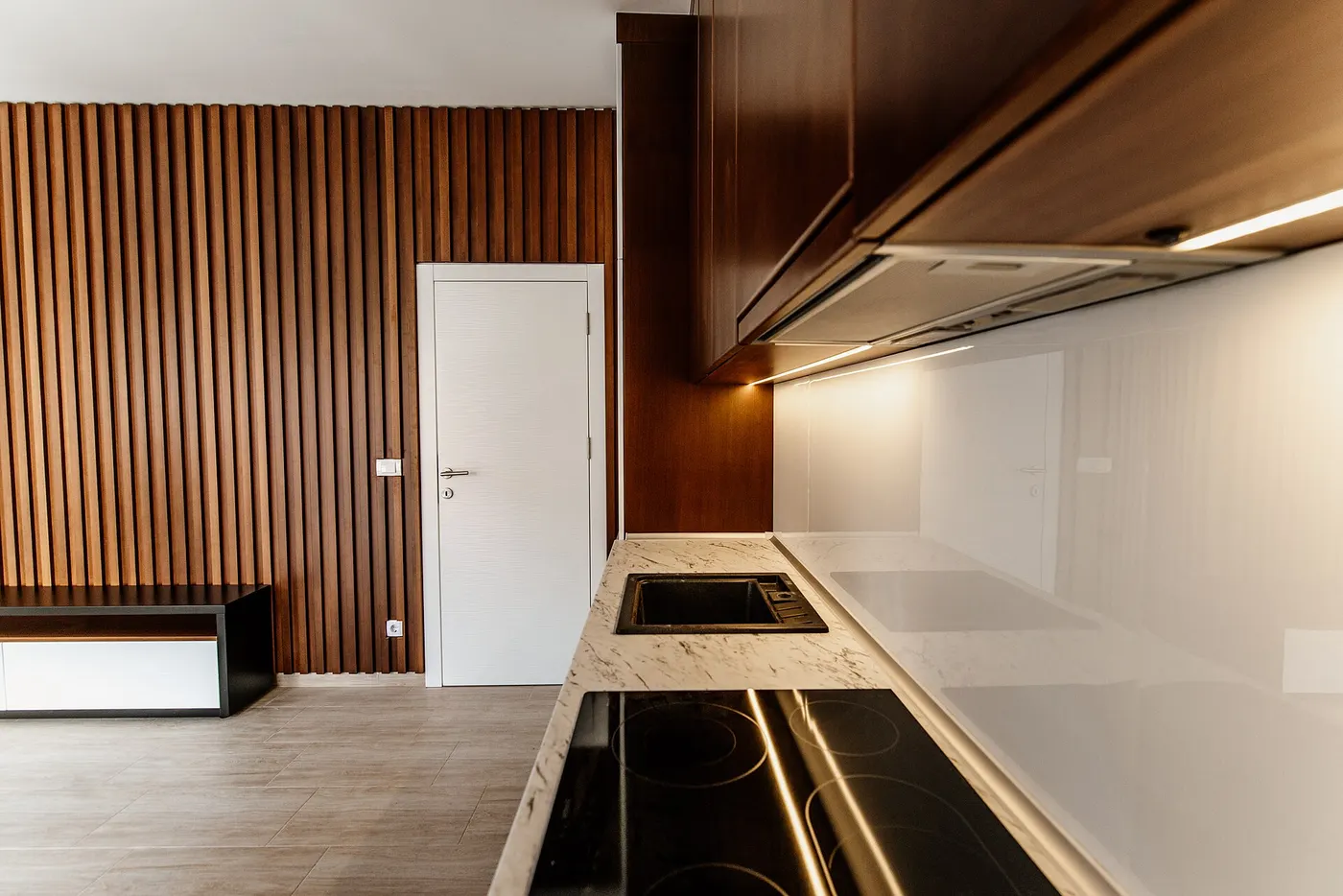
Induction only heats a base that a magnet sticks to. That rules out solid copper and solid aluminium entirely unless they are made with a ferrous disc bonded to the base, and it is the first question to settle, because it removes whole categories of cookware from consideration before any other criterion applies.
Gas is the opposite: it heats anything, including a round-bottomed pan and a base narrower than the burner, and it rewards materials that respond quickly. Ceramic and halogen hobs want a flat, heavy base in full contact with the glass, and they punish a warped pan with slow, uneven cooking that looks like a pan fault and is a contact fault.
Take a fridge magnet to any pan you are considering. If it holds on the base, the pan works on induction. That 10-second test settles more purchases than any specification table does, and it is the one check that cannot be done from a listing photograph.
| Hob | Needs | Rules out | Forgives |
|---|---|---|---|
| Induction | A ferrous base a magnet holds to | Solid copper and solid aluminium with no steel disc | Base diameter slightly smaller than the zone |
| Gas | Almost nothing | Nothing | Warped bases, narrow bases, round bottoms |
| Ceramic or halogen | A flat base in full contact with the glass | Warped or ridged bases | Non-ferrous materials |
| Solid plate | A flat base and patience | Thin bases that warp with heat | Non-ferrous materials |
The magnet test takes 10 seconds and answers the induction question definitively. Everything else on this page assumes the pan will physically work on your hob.
Material decides the job, and the upkeep
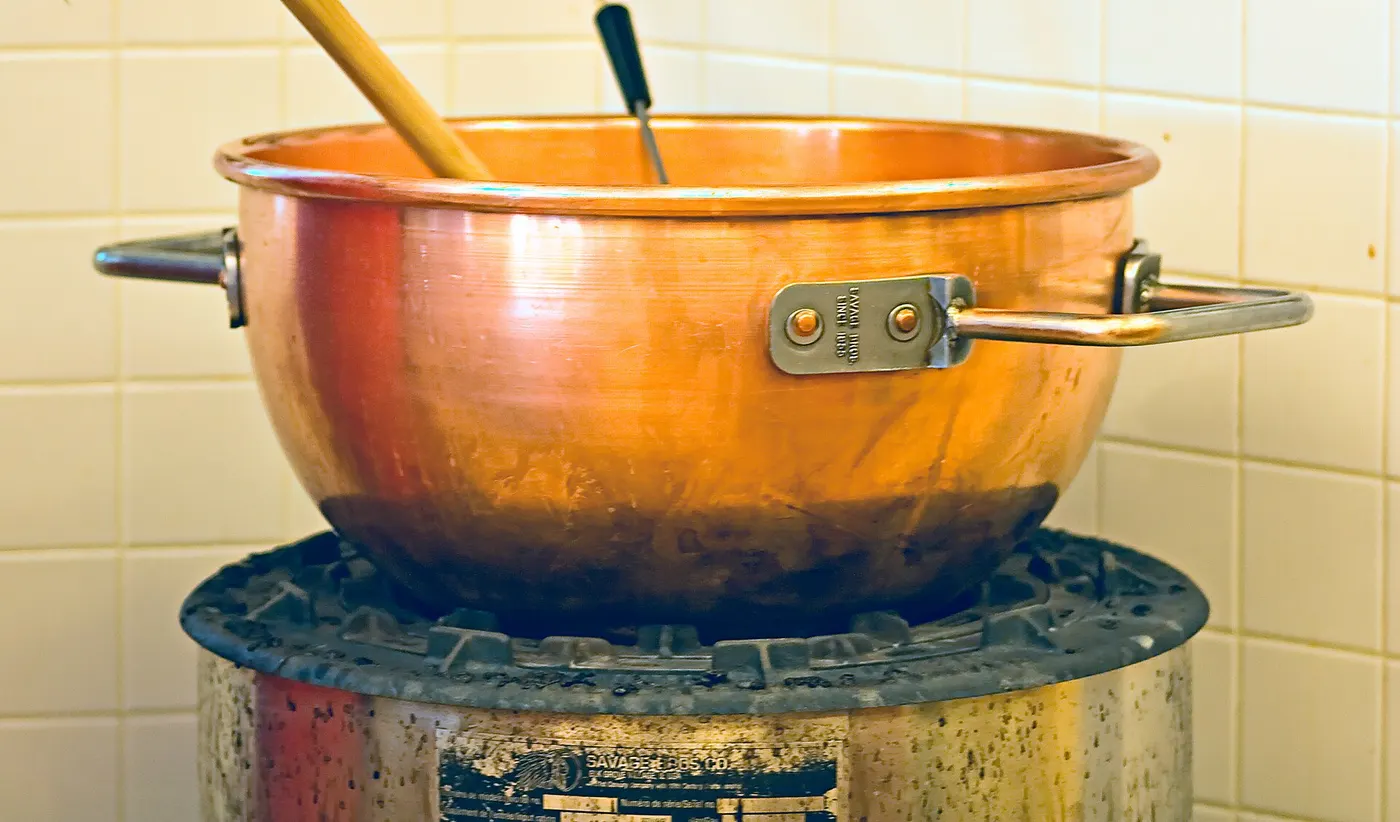
Each material trades responsiveness against durability and upkeep. Copper changes temperature fastest, which is why it survives in professional kitchens for sauces and sugar work, and traditional copper is lined with tin, which wears and eventually needs replacing by a specialist. Stainless tri-ply is slower but effectively permanent and takes a dishwasher without complaint.
Enamelled cast iron holds heat rather than responding to it, which is what you want for a braise and the wrong thing for a quick reduction. Its weakness is thermal shock rather than wear: Le Creuset's own care instructions say to use only medium to low heat, not to fill a hot pan with cold water or plunge it into cold water, and give 260°C as the maximum oven temperature.
Non-stick is the only category here with a designed-in end of life. The coating wears with use regardless of care, so the question is not whether it will be replaced but how often, and that is what the cost-per-year table in the next section is for.
| Material | Best at | Needs | How it ends |
|---|---|---|---|
| Stainless tri-ply | Even heat, everyday use, dishwasher | Nothing beyond washing | Rarely; handles loosen before the body fails |
| Enamelled cast iron | Braises, bread, long slow cooking | Medium to low heat, no thermal shock, 260°C oven limit | Chipped enamel from knocks or shock |
| Tinned copper | Sauces, sugar work, fast response | Hand washing, eventual retinning | The tin lining wears through and is replaced |
| Carbon steel | High-heat searing, light weight | Seasoning and drying after washing | Rust, if dried badly, which is reversible |
| Non-stick | Eggs, fish, low-fat cooking | Soft utensils, moderate heat | The coating wears out, by design |
Cost per year is the comparison that changes decisions
Divide the price by the years the piece will realistically last. An example €35 non-stick frying pan replaced every 3 years costs €11.67 a year. An example €120 stainless tri-ply sauté pan kept 25 years costs €4.80 a year, which is less than half, and it outlasts eight replacements of the cheaper pan.
Copper is the interesting case because it has a mid-life cost. An example €220 tinned copper saucepan kept 25 years is €8.80 a year on the purchase alone. Add one retinning at an example €90 somewhere in that period and the total becomes €310 over 25 years, which is €12.40 a year — dearer than the non-stick pan on this arithmetic, and a pan you still own at the end.
The arithmetic is not an argument for always buying the dearest thing. It is an argument for being explicit about the life you expect. A pan you will keep for 3 years should be bought as a 3-year pan, and the sum tells you what that costs.
| Piece | Example price | Years kept | Cost per year | Cost per use |
|---|---|---|---|---|
| Non-stick frying pan | €35 | 3 years | €11.67 | €0.29 |
| Stainless tri-ply sauté pan | €120 | 25 years | €4.80 | €0.12 |
| Tinned copper saucepan | €220 | 25 years | €8.80 | €0.22 |
| The same copper pan with one retinning at €90 | €310 | 25 years | €12.40 | €0.31 |
| Enamelled cast-iron casserole | €180 | 30 years | €6.00 | €0.15 |
Cost per year is price divided by years. Cost per use is price divided by 40 uses a year times the years kept. All prices are examples used to show the arithmetic, not prices we have checked at any seller; the cost-per-serving calculator on this site takes your own figures.
Buy the size you will actually lift
A 28 cm enamelled cast-iron casserole full of a braise is heavy enough that some households never use it, which makes its cost per year infinite rather than €6.00. The useful size is the one you will carry from hob to oven with one hand on each handle, and that is a decision to make by picking the piece up, not by reading a capacity in litres.
Base diameter matters as much as capacity. A pan whose base is wider than the hob zone heats unevenly in the middle, and one narrower than the zone wastes energy around the edge on a solid plate or a ceramic hob. Measure the zones in your own kitchen once and write the numbers down; they do not change and they determine every future pan purchase.
Handle design is the third dimension. A single long handle is right for a pan you shake and wrong for one you lift full from an oven, and a cast-iron handle gets as hot as the pan while a hollow stainless one stays cooler. Mixed sets exist for this reason rather than for appearance.
- Measure each hob zone diameter and write the figures down
- Pick up the casserole in the shop, then imagine it with 3 kg of food in it
- Match base diameter to the zone, not pan diameter to the shelf space
- Choose two long-handled pans for shaking and two with side handles for lifting
- Confirm every lid fits the pan it belongs to and that spares are sold separately
- Check whether handles are riveted or screwed, because screws loosen and rivets do not
What the law in Ireland gives you if a piece fails
The Competition and Consumer Protection Commission sets out three periods under the Consumer Rights Act 2022. A fault appearing within 30 days of purchase or delivery gives you a short-term right to cancel and get a full refund. A fault appearing within the first 12 months is presumed to have existed at purchase, so you do not have to prove anything.
Beyond that, your right to a repair, replacement, price reduction or refund runs up to 6 years from purchase, and the CCPC is explicit that the business you bought from is responsible for providing that remedy rather than directing you to the manufacturer. A lifetime guarantee from a maker sits on top of those rights, not instead of them.
If you simply change your mind about an online order, the cooling-off period is 14 days from receiving the goods, with a full refund including standard delivery costs. Personalised and made-to-order items are excluded from that right, which matters for engraved or bespoke pieces.
Before you buy
- Take a magnet to the base of any pan you are considering if you cook on induction
- Measure every hob zone diameter in your own kitchen and keep the figures
- Lift the casserole in the shop and imagine 3 kg of food in it
- Write down how many years you expect each piece to last before comparing prices
- Divide each price by those years and compare cost per year, not shelf price
- Budget a mid-life retinning if you buy traditional tinned copper
- Keep receipts: the 6-year remedy period under the Consumer Rights Act 2022 runs from purchase
Questions readers ask
- Is copper worth the money on an induction hob?
- Only if the pan has a ferrous disc bonded to its base, and that disc removes much of the responsiveness copper is bought for. On induction, the heat source already changes power almost instantly, so the material's main advantage is duplicated by the hob. Stainless tri-ply or enamelled cast iron usually makes more sense there.
- How often does tinned copper need retinning?
- It depends on use rather than age: the lining wears where utensils and heat work on it, so a pan used weekly for sauces reaches that point far sooner than one used a few times a year. The practical signal is copper showing through the tin across an area rather than at a single spot. The example in this guide budgets one retinning across 25 years.
- Should I buy a matched set or individual pans?
- Individual pieces, in almost every case. Sets are priced around pieces most households use rarely, and the sizes that get daily use wear out at different rates. Buying the three sizes you cook in most, in the material that suits each job, costs less over ten years than replacing a set because two pans in it failed.
- Does a lifetime guarantee mean I never pay again?
- Read what it covers rather than what it is called. Guarantees typically exclude normal wear, which is exactly how non-stick coatings and tin linings end. Your statutory rights in Ireland are separate and run up to 6 years from purchase under the Consumer Rights Act 2022, and they sit with the seller rather than the manufacturer.
- Can I put enamelled cast iron in the dishwasher?
- Le Creuset states that most of its cookware is dishwasher safe but recommends hand washing for non-stick surfaces to prolong performance. For enamel the practical issue is appearance rather than function, and the care instructions also say to cool pans for a few minutes before washing in hot soapy water and to avoid harsh abrasive pads.
Sources
- CCPC — Faulty goods: 30 days, 12 months and 6 years under the Consumer Rights Act 2022 — checked 2026-11-03
- CCPC — Changing your mind: 14-day cooling-off period on online and phone purchases, full refund including standard delivery — checked 2026-11-03
- Le Creuset — Care and use instructions (manufacturer documentation: 260°C oven limit, medium to low heat, no thermal shock) — checked 2026-11-03
Advertising is not enabled on this site yet. When it is, ads will be labelled and kept visually separate from the guides.